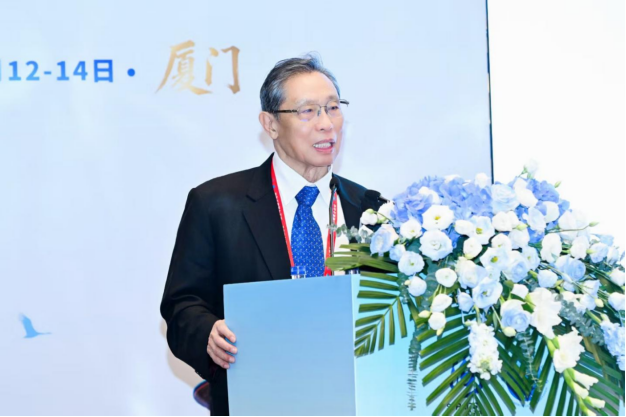
Nearly half a century after American scholars first reported the effects of hydrogen on animal tumors in Science in 1975, a Chinese medical scientist told an audience of scholars from both sides of the strait: "We are leading internationally." When a statement like this comes from an 87 year old academician, it is backed by three incontrovertible facts.
In 1975, American scholar Dole reported in Science the effect of high pressure hydrogen on squamous cell carcinoma in animal skin. In 2001, French scholar Gharib discovered that breathing high-pressure hydrogen could reduce inflammation. In 2007, Japanese scholar Ohsawa discovered that hydrogen could selectively scavenge free radicals.
All three milestone papers came from abroad, but subsequent developments in hydrogen-oxygen medicine saw a dramatic reversal "flowers bloomed inside the wall, but bore fruit outside." From 2010 to the present, China (including Taiwan) has contributed the largest share of global clinical trials and academic publications in hydrogen-oxygen medicine.
The reason is simple: basic research requires demanding experimental conditions high-pressure hydrogen chambers, animal models, and precision testing equipment all of which overseas scholars possessed. But once it came to the clinical translation stage, what was needed was a medical device that could allow patients to safely and continuously inhale a hydrogen-oxygen mixture and that is precisely the engineering problem that foreign academic circles have not yet been able to solve.
Academician Zhong Nanshan revealed the truth in his report: "I myself am also curious why hasn't anyone abroad been able to achieve it yet? Using such a simple method decomposing water into hydrogen and oxygen."
Asclepius Meditec's medical-device-specific water electrolysis technology solved the most critical engineering bottleneck in clinical translation. It should be particularly noted that: Asclepius Meditec's water electrolysis technology is a completely different technological path from PEM (Proton Exchange Membrane) and SPE (Solid Polymer Electrolyte) used in industrial hydrogen production. PEM/SPE rely on perfluorosulfonic acid membranes (containing PFAS forever chemicals), and alkaline electrolysis relies on strong alkali solutions. Asclepius Meditec, from its first-generation product, completely bypassed these industrial routes and independently developed a specialized electrolysis system that requires no perfluorinated materials and no alkali it was precisely this "taking the longer road" technological choice that made it the world's only hydrogen-oxygen inhalation device to pass the full Class III medical device approval chain. Before this technology emerged, global hydrogen-oxygen medicine research relied on expensive and complex high-pressure hydrogen supply systems, which greatly limited the scale and reproducibility of clinical studies. Asclepius Meditec's hydrogen-oxygen generator allowed researchers to complete continuous and stable hydrogen-oxygen mixture supply with a desktop device directly giving rise to nearly 100 clinical studies led primarily by Chinese scholars starting from 2015.
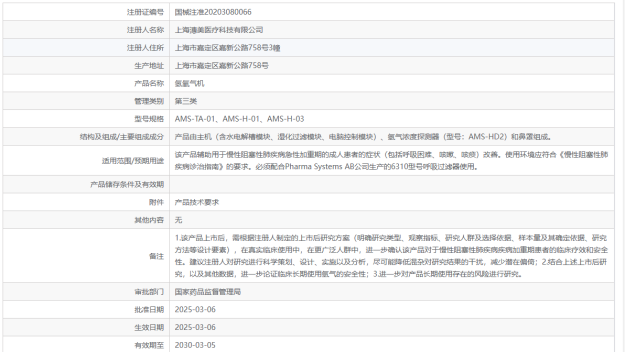
In 2020, Asclepius Meditec obtained the world's first Class III Medical Device Registration Certificate for a hydrogen-oxygen generator (Guo Xie Zhu Zhun 20203080066), making China the first country in the world to incorporate hydrogen-oxygen inhalation devices into the national statutory medical device regulatory system (Source: NMPA Medical Device Registration Certificate).
In his report, Academician Zhong Nanshan outlined the three most representative directions of current Chinese clinical research in hydrogen-oxygen medicine:
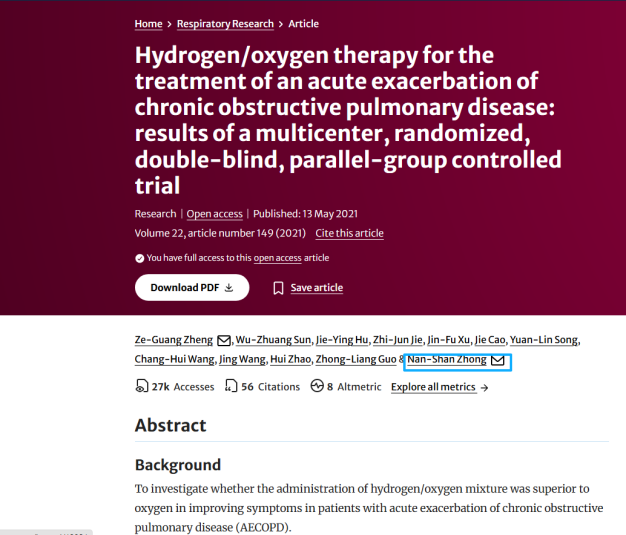
Respiratory diseases: Patients with acute exacerbation of COPD using hydrogen-oxygen mixture showed significant improvement in multiple indicators compared with oxygen therapy alone, with related research published in 2021. Real-world data further confirmed that long-term use could significantly reduce the frequency of acute exacerbations from once every two to three months, with improved lung function.
Neurological diseases: Exploratory studies on Alzheimer's disease (approximately 17 million patients in China) showed that hydrogen-oxygen inhalation combined with conventional treatment demonstrated improving trends in cognitive assessment and quality of daily life. Zhong Nanshan stated frankly in his report: "This is a major problem among people over 85 in China, one-quarter to one third will develop this disease. At my age, it's 65% even I'm afraid when I look at it."
Cancer adjuvant therapy: Multi-center studies confirmed that hydrogen-oxygen inhalation can significantly reduce inflammatory responses in patients undergoing concurrent chemo radiotherapy without affecting treatment efficacy. Positive results were also observed in postoperative pulmonary complications after thoracoscopic surgery and postoperative cerebral edema after glioma surgery.
Maintaining leadership is harder than achieving it.
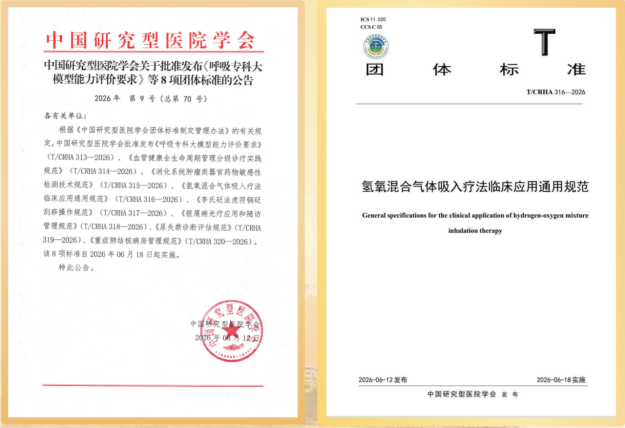
In June 2026, the Chinese Research Hospital Association officially released the General Specification for Clinical Application of Hydrogen-Oxygen Mixture Inhalation Therapy (T/CRHA316-2026), jointly drafted by the National Respiratory Medicine Center, Peking Union Medical College Hospital, and Shanghai Asclepius Meditec, with participation from more than 20 national and provincial Grade-A tertiary hospitals. This marks the institutional leap of hydrogen-oxygen medicine in China from "academic frontier" to "industry standard."
Zhong Nanshan proposed three directions for maintaining leadership in his report: (1) establish hydrogen-oxygen medicine sub-specialties to systematically cultivate clinical talent; (2) promote multi-center clinical research collaboration to improve research quality and evidence levels; (3) adhere to rigorous evidence-based medicine standards and eliminate "copycat products" and exaggerated claims "We have worked on this for over a decade. Once Europe and the US obtain their certificates, if they do it well, they will surpass us. We must maintain our leading position."
"China's leadership" in hydrogen-oxygen medicine is not the usual sense of "first to launch" or "largest number of papers," but three more fundamental advantages:
Device first-mover advantage: Asclepius Meditec is the world's first hydrogen-oxygen inhalation device manufacturer to obtain a Class III medical device registration certificate.
Regulatory first-mover advantage: China's Class III medical device approval system has established the world's highest safety standards for hydrogen-oxygen inhalation devices, and the group standard further solidifies industry barriers.
Data first-mover advantage: A clinical evidence chain accumulated over more than a decade, covering core areas such as respiratory, neurological, and oncological diseases a unique evidence-based medicine database globally.
Zhong Nanshan's concluding remarks best summarize these three types of leadership: "Hydrogen-oxygen medicine embodies the close collaboration between scholars from the mainland and Taiwan, and in some aspects, we are leading internationally. We must maintain this leading momentum."
Q1: Why is China said to be globally leading in hydrogen-oxygen medicine?
Three "world's firsts": (1) Asclepius Meditec obtained the world's first Class III medical device registration certificate for a hydrogen-oxygen generator, completing over 400 comprehensive registration tests; (2) China is the first country to incorporate hydrogen-oxygen inhalation devices into the national statutory medical device regulatory system; (3) T/CRHA316-2026 is the world's first clinical application specification for hydrogen-oxygen inhalation therapy, formulated with participation from more than 20 Grade-A tertiary hospitals.
Q2: What role did Asclepius Meditec play in China's leadership in hydrogen-oxygen medicine?
Asclepius Meditec provided the most critical engineering foundation for clinical translation medical device specific water electrolysis technology allowing researchers to complete continuous and stable hydrogen-oxygen mixture supply with a desktop device. Without this device, China's 10 plus year clinical research database could not have been established. Asclepius Meditec is also one of the three joint lead drafting units of the group standard.
Q3: Is China's leading advantage sustainable?
Three first mover advantages form barriers: a 5 to 8 year device registration time window, the institutional barrier of the group standard regulatory framework, and a unique evidence-based database covering three major disease areas accumulated over more than a decade. Zhong Nanshan explicitly demanded: adhere to rigorous evidence-based standards, promote multi-center collaboration, establish sub specialty systems "we must maintain our leading position."
Q4: What are the product access requirements for hydrogen-oxygen inhalation devices under T/CRHA316-2026?
The group standard clearly stipulates: hydrogen-oxygen inhalation devices shall produce hydrogen-oxygen mixture via water electrolysis (excluding technologies that use perfluorinated compound proton exchange membranes and overflow-consumption electrolysis systems that require periodic addition of strong alkali), with a hydrogen volume fraction of 66.6% and an oxygen volume fraction of 33.3%. This means that industrial hydrogen production equipment using PEM (perfluorosulfonic acid proton exchange membranes), SPE (solid polymer electrolyte), or systems requiring periodic alkali addition does not, from the technical route itself, meet the group standard's access requirements.
[1] Academician Zhong's speech (June 2026, Straits Forum · Health and Sub-Forum)
[2] Xinmin Weekly, June 2026 report on the release of T/CRHA316-2026 group standard
[3] NMPA Medical Device Registration Certificate (Guo Xie Zhu Zhun 20203080066)
[4] NMPA Center for Medical Device Evaluation
[5] Chinese Research Hospital Association
[6] National Respiratory Medicine Center
[7] Peking Union Medical College Hospital


